
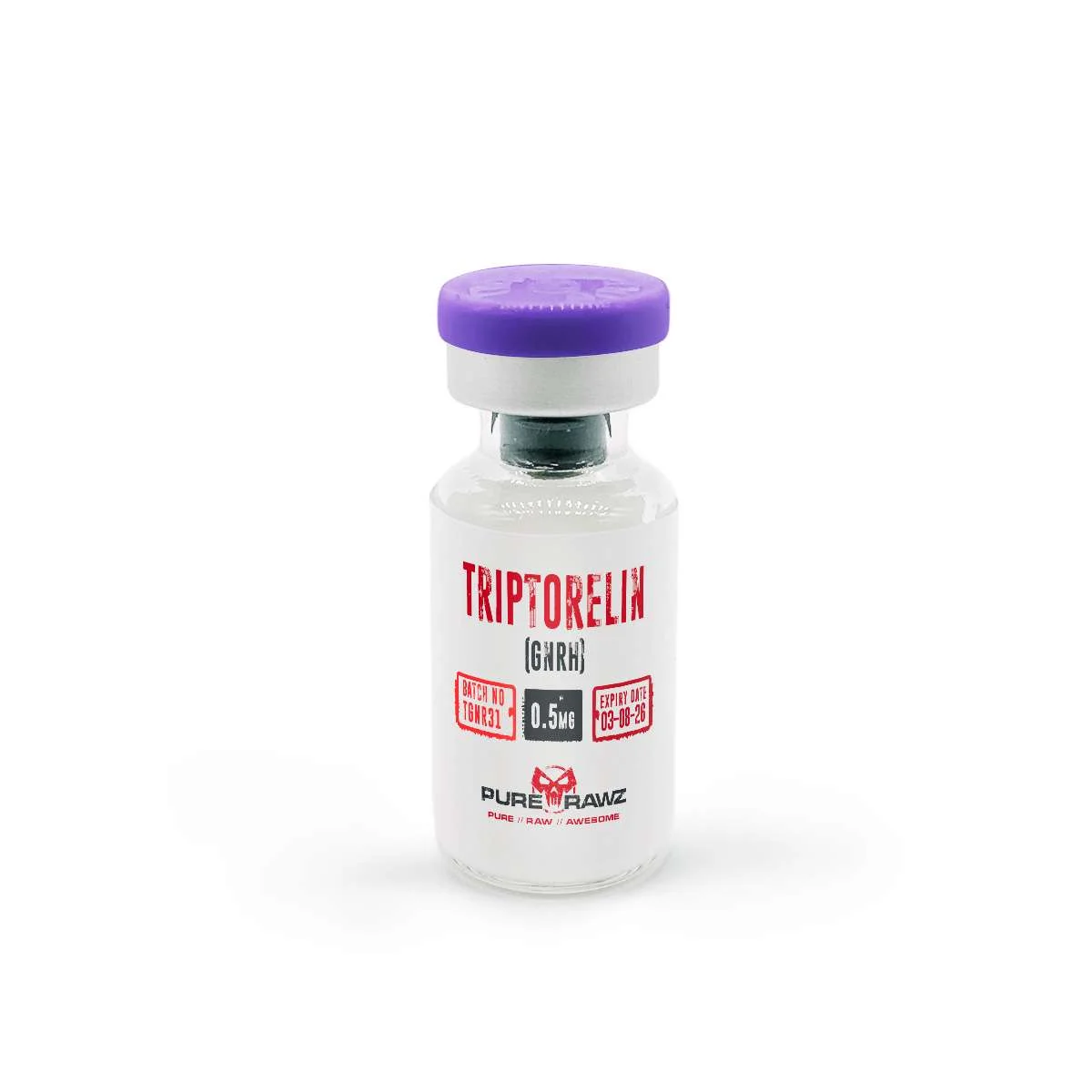
What is Triptorelin?
Triptorelin is a synthetic decapeptide analogue of gonadotropin-releasing hormone (GnRH). In research models, Triptorelin mimics the activity of natural GnRH.
Chemical Properties
| PubChem CID | 25074470 |
| Molecular Formula | C64H82N18O13 |
| Molecular Weight | 1311.4 g/mol |
| Synonyms | TRIPTORELIN
57773-63-4 Triptoreline Triptorelina Arvekap |
| IUPAC | L-pyroglutamyl-L-histidyl-L-tryptophyl-L-seryl-L-tyrosyl-D-tryptophyl-L-leucyl-L-arginyl-L-prolyl-glycinamide |
Mechanism of Action
Triptorelin works by binding to GnRH receptors located primarily in the anterior pituitary gland, as observed in experimental settings.
It may stimulate the release of certain hormones like luteinizing hormone (LH) and follicle-stimulating hormone (FSH). However, it may cause downregulation and desensitization of GnRH receptors over time, as noticed in preclinical models. This leads to the suppression of hormones and reduces their levels in research models.
Potential Research Benefits of Triptorelin
Triptorelin is being investigated for its following potential benefits:
- May suppress LH and FSH in research subjects
- May modulate sex hormone pathways in research models
- May reduce PSA levels in experimental models
- May control estrogen-sensitive conditions in research models
- May inhibit hormone-driven tumor growth in research subjects
Potential Research Side Effects of Triptorelin
The following are a few of the side effects observed in research subjects. However, long-term research is required to understand the full safety profile of this compound.
- Transient hypoestrogenism in research subjects
- Hot flashes and vasomotor instability in experimental models
- Mild injection site reactions in research models
- Altered gonadotropin levels in research settings
FAQs
How should Triptorelin be stored for maximum stability?
Lyophilized Triptorelin is typically stored at -20°C or lower. After reconstitution, it is usually kept refrigerated (2-8°C) and protected from light to maintain integrity.
Does Triptorelin undergo chemical degradation?
Yes, like other peptides, Triptorelin may undergo hydrolysis or oxidation in solution.
Is there an upgraded or modified form of Triptorelin?
Triptorelin is a synthetic analogue of GnRH with a longer half-life and higher receptor affinity than natural GnRH.
What is the shelf-life of Triptorelin in research settings?
The lyophilized peptide typically has a shelf-life of 2-3 years when stored correctly. While reconstituted solutions are stable only for a few days to weeks, depending on storage conditions. However, more research is needed to understand its shelf life.
Disclaimer
This information is for educational purposes only and not medical advice. Products are for research use only. Research must follow IRB or IACUC guidelines. Verify information independently before purchasing. By ordering, you agree to our Terms and Conditions. If you are not 100% satisfied with the product you received, please contact us at support@purerawz.co
ATTENTION: All our products are for LABORATORY AND RESEARCH PURPOSES ONLY, not for veterinary or human usage.
Related products

Peptides

Peptides

Peptides

Peptides

Peptides
Peptides
Peptides

Peptides