
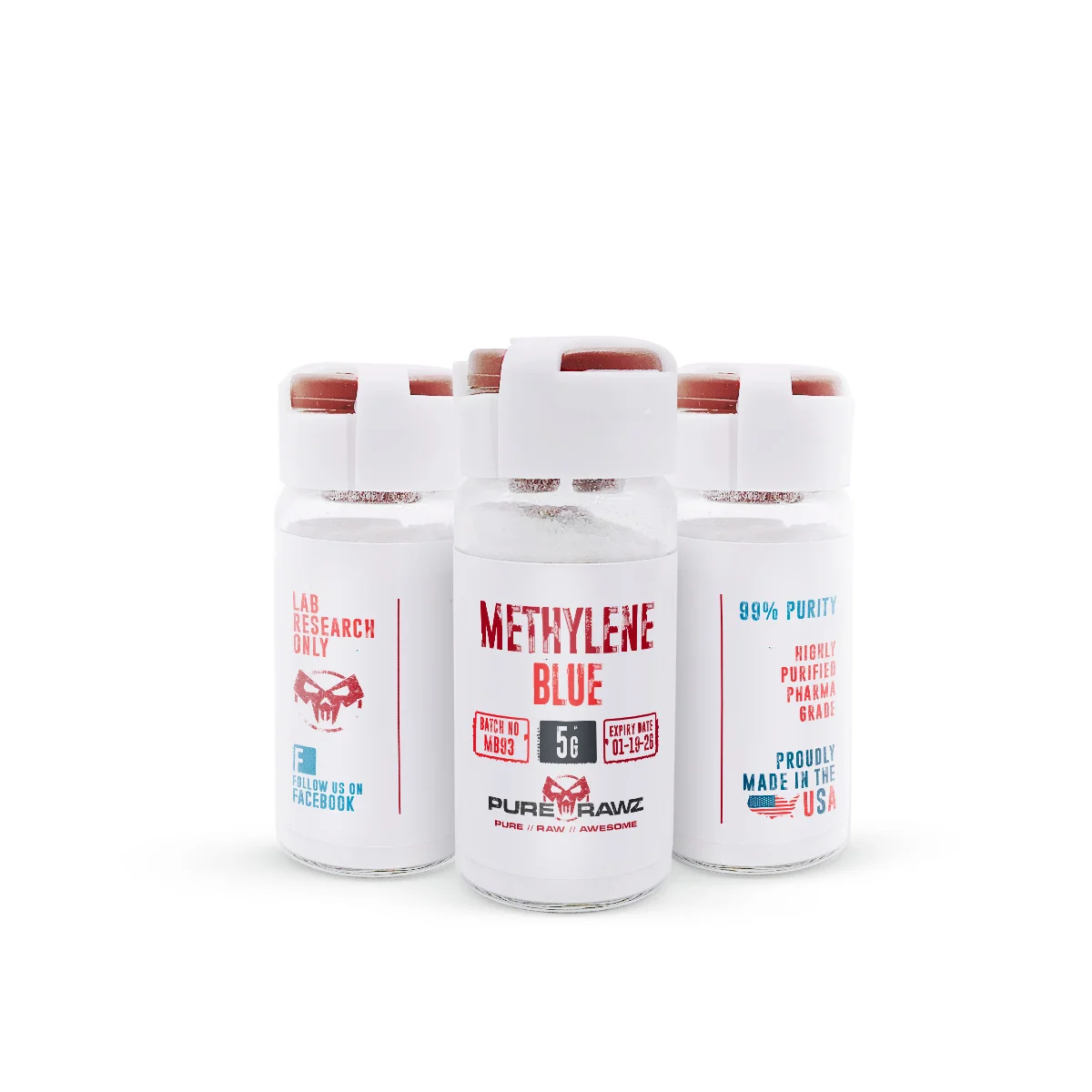


What is Methylene Blue?
Methylene blue (methylthioninium chloride or MB) is a synthetic dye first produced in 1876 by Heinrich Caro. By 1891, MB was among the earliest chemotherapy agents and was later used to treat malaria. This was before modern drugs like chloroquine. [R] [R]
It also plays a special role in addressing methemoglobinemia. The latter is a rare condition where hemoglobin cannot release oxygen properly. MB is believed to restore normal oxygen transport. [R]
Recent studies explore its potential anti-cancer and neuroprotective effects. Some evidence suggests that MB may reduce reactive oxygen species (ROS) levels. [R] [R] [R]
What’s the mechanism of action of Methylene Blue?
Methylene blue is distinctive because it can interact with cells on multiple fronts. These may cover energy production to protein stability and signaling pathways.
Role in the Electron Transport Chain
Methylene blue can step into the mitochondrial energy system as an alternative electron carrier. By transferring electrons across the electron transport chain, it helps maintain the flow of energy production in cells. [R]
Influence on Mitochondrial Performance
MB is believed to bypass certain blockages in energy pathways. Through this action, it has been shown in experiments to optimize mitochondrial efficiency. [R]
Antioxidant Properties
Research suggests methylene blue may modulate reactive oxygen species (ROS) levels through redox cycling. These are unstable molecules that contribute to oxidative stress. [R]
Interaction with Amyloid Proteins
In studies of neurodegeneration, methylene blue has been demonstrated to interfere with the clumping of amyloid proteins. These compounds, when misfolded, are linked to impaired brain function. [R]
Effects on Neurochemical Signaling
Methylene blue appears to influence chemical communication within the nervous system. It can:
- Inhibit monoamine oxidase (MAO–A): This is the enzyme that breaks down neurotransmitters such as serotonin and dopamine. [R]
- Enhance cGMP signaling: This action supports cellular communication pathways involved in learning and memory. [R]
Although these effects are still under investigation, they point to methylene blue’s possible wide-ranging impact on neurotransmission.
What are the potential benefits of Methylene Blue?
Cellular Energy and Fatigue Resistance
Methylene blue supports the mitochondrial electron transport chain. By doing so, it enables a more efficient production of ATP. The latter is a molecule that powers cellular processes. In animal studies, this effect could translate into improved energy metabolism and greater resilience under stress conditions. [R]
Cognitive and Brain Function Support
Research indicates that methylene blue may influence neurotransmitter systems, such as dopamine and serotonin. It may even enhance cGMP signaling. Both of these are crucial for learning and memory. Imaging studies on methylene blue suggest potential advantages for working memory and attention. [R]
Neuroprotection in Degenerative Models
Methylene blue has been observed to interfere with amyloid protein aggregation. It has also shown the potential to reduce oxidative damage in neuronal cells. In Alzheimer’s disease research models, the investigational compound lowered toxic protein buildup and supported neuron survival. [R]
Healthy Aging and Longevity Research
Oxidative stress and mitochondrial dysfunction are strongly linked to aging. As such, methylene blue’s potential antioxidant and mitochondrial-supporting actions have been studied. The goal is to determine if this compound may contribute to healthier aging. [R]
Skin and Cellular Repair
Experiments conducted with skin cells suggest that methylene blue may enhance mitochondrial function. The action could lead to reduced markers of oxidative damage. Some studies have even reported improved cell viability and reduced wrinkle-associated changes among laboratory models. [R]
Stress and Mood Regulation
One observed ability of methylene blue among research models involves inhibiting monoamine oxidase (MAO-A) and modulating neurotransmitter availability. This led to investigations regarding the compound’s role in stress response and mood regulation. Findings are still preliminary and will require more controlled studies. [R]
Oxygen Utilization and Recovery
In the clinical setting of methemoglobinemia, methylene blue may restore hemoglobin’s ability to carry oxygen. Beyond this, research models suggest it may also improve cellular oxygen use and recovery from oxidative stress. However, these broader applications still remain under active investigation. [R]
Detoxification and Inflammation Control
By lowering oxidative stress and improving mitochondrial efficiency, methylene blue has been proposed as a candidate for detoxification support and inflammation control. These effects are observed within research contexts only. [R]
IMPORTANT: The mentioned possible effects of methylene blue are based on clinical and laboratory findings. These should not be interpreted as medical advice. Methylene blue is not approved for human consumption since it is classified as a research compound. More studies are needed to verify its effects on humans.
Current Research On Methylene Blue
- Vasoplegic syndrome is an increasing challenge in complex cardiac surgery. One study found that methylene blue may improve blood pressure and reduce the need for vasopressors in severe cases. [R]
- Methylene blue has been studied for over a century. Its biological effects are primarily linked to mitochondrial function and redox cycling, which influence reactive oxygen species (ROS). Current research has shown particularly promising results in bipolar disorder. It has been linked to improving mood and reducing residual symptoms. However, more studies are needed to confirm this potential effect. [R]
What is the best place to buy Methylene Blue?
PureRawz is the best place to purchase methylene blue. Every batch of our product undergoes strict quality standard protocols to ensure effectiveness. We even provide Certificates of Analysis (COAs) to demonstrate product purity and quality. Plus, we have a responsive and knowledgeable customer support team that is available 24/7 to address any product inquiries.
Note:In the Nootropics Powder category, PureRawz offers lab-tested formulations including Bromantane, Oxiracetam mong others.
Is Methylene Blue legal?
Methylene blue is classified as a research compound. As such, it should be purchased solely for laboratory research use. This product is not approved for human medication and supplementation.
FAQs
Is methylene blue a nootropic?
It is still unclear if methylene blue can be safely classified as a nootropic, although some believe it is. MB’s association as a nootropic could be based on its potential ability to influence cognitive function. However, more studies are needed to verify this effect.
What is methylene blue being studied for?
It is currently under investigation for various roles in neurodegeneration, antimicrobial photodynamic therapy, mitochondrial support, and cancer biology.
Does methylene blue come with side effects?
Yes. Reported adverse effects include serotonin syndrome (particularly when combined with serotonergic drugs), hemolytic anemia in G6PD-deficient patients, and hypersensitivity reactions.
What specific actions of methylene blue make it a promising candidate for neuroprotection?
Methylene blue is purported to reduce oxidative stress, support mitochondrial function, and limit amyloid protein aggregation. These supposed actions have made the chemical of special interest in neuroprotection research.
Is methylene blue approved for human consumption?
No. Methylene blue is regarded as a research chemical. It is not approved for human consumption. PureRawz provides this compound strictly for laboratory research purposes only.
Related products

Nootropics

Nootropics

Nootropics
Nootropics

Nootropics

Nootropics

Nootropics

Nootropics