

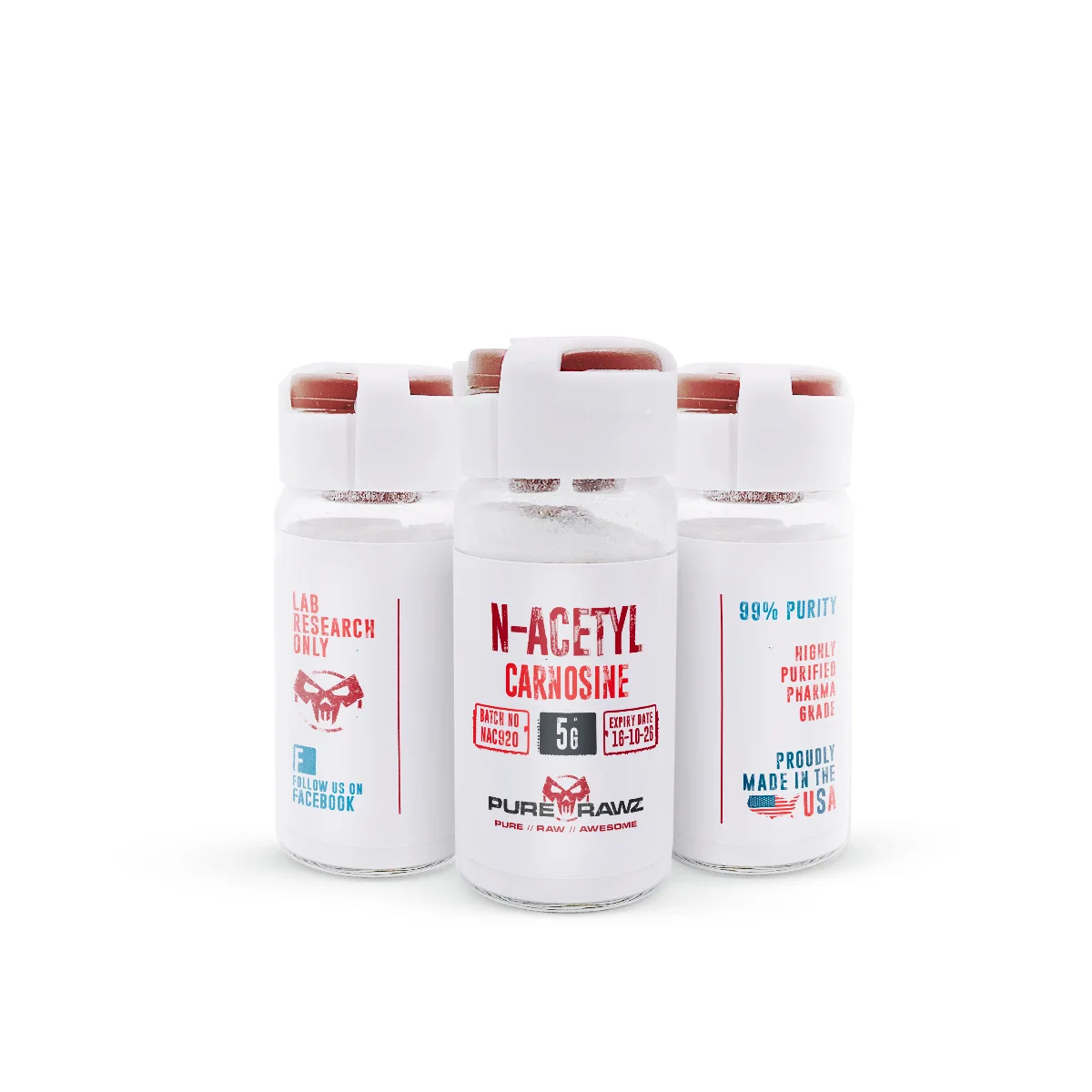
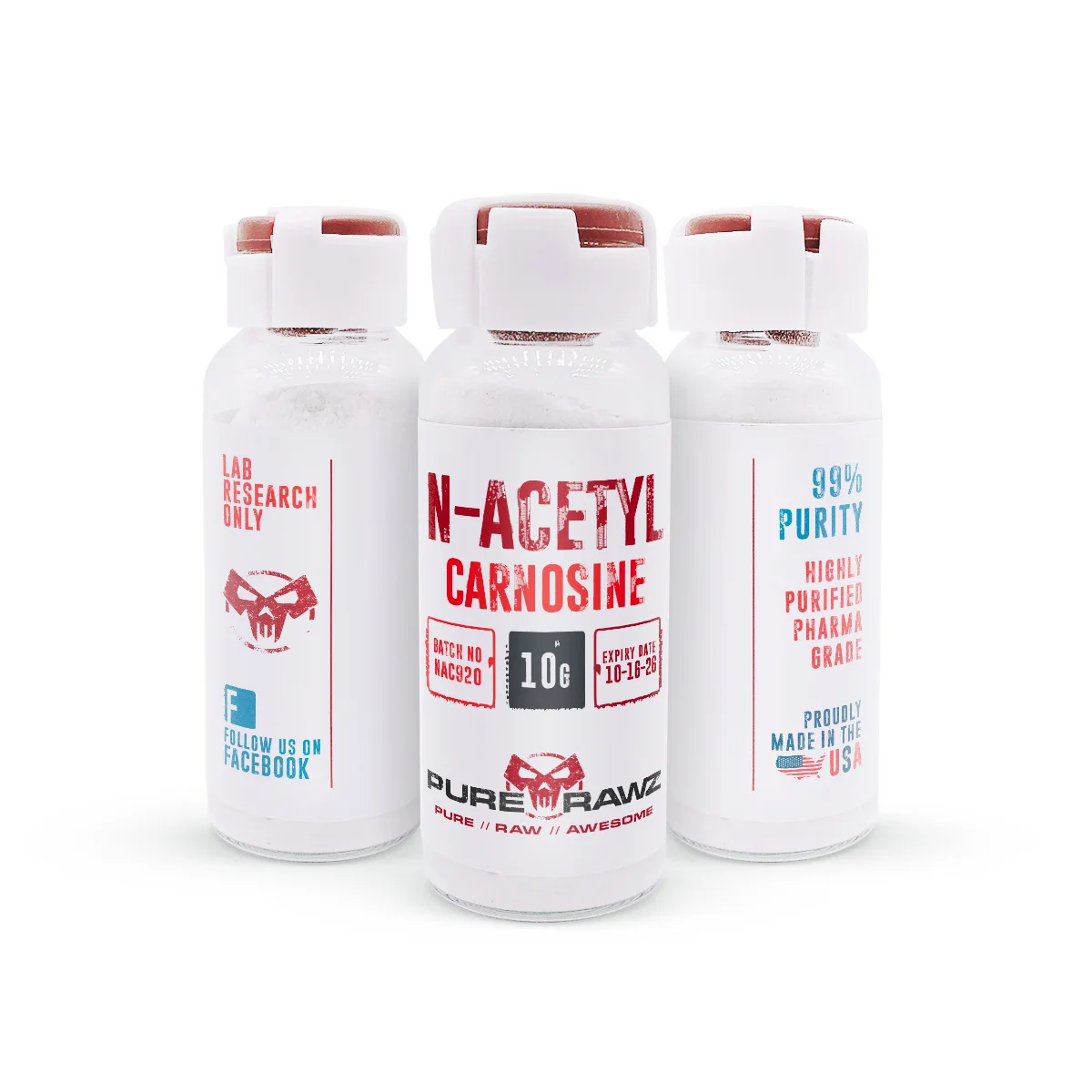



What is N-Acetyl Carnosine?
N-Acetyl Carnosine (NAC) is a stable, acetylated form of the naturally occurring dipeptide carnosine, made from beta-alanine and L-histidine. Researchers study this compound for its antioxidant and anti-glycation properties in research compounds.
The main area of focus of research on N-Acetyl Carnosine is in eye health of research models. It has been investigated in experimental settings as an ingredient in eye drops for supporting lens clarity and potentially slowing age-related cataract development.
How Does N-Acetyl Carnosine Work?
In different research subjects, NAC has been shown to penetrate the cornea and reach the lens, where it helps neutralize reactive oxygen species (ROS). It may also reduce oxidative stress, which is a key factor in cataract formation and other age-related eye changes in experimental models.
Some preclinical models has indicated that NAC may help prevent the crosslinking and stiffening of lens proteins caused by glycation. Glycation has appear to contributes to lens clouding.
Potential Benefits of N-Acetyl Carnosine?
N-Acetyl Carnosine is still under investigation; however, preliminary studies have shown its following potential benefits in research settings.
- May protect eye tissues from oxidative stress in experimental models.
- Potentially slows the progression of cataracts in preclinical models.
- Possibly improve lens transparency in experimental settings.
- Might enhance antioxidant defense in ocular tissues in preliminary studies.
- May reduce protein glycation in eye structures in preclinical models.
- Potentially support overall eye health in experimental settings.
Potential Side Effects of N-Acetyl Carnosine
The following are a few of the side effects observed in research subjects. However, long-term research is required to understand the full safety profile of this compounds.
- May cause mild eye irritation in experimental settings.
- Potentially leads to a temporary burning or stinging sensation in preliminary studies.
- Possibly trigger allergic reactions in preclinical models.
- Might result in redness or discomfort in experimental models.
- It may affect tear film stability in preliminary studies.
- Potentially present unknown long-term safety concerns in preclinical models.
Your First Choice To Buy N-Acetyl Carnosine is Purerawz!
When it comes to buying N-Acetyl Carnosine, Purerawz will never disappoint. At our online shop, we make sure that our customers have a smooth and hassle-free experience. Therefore, we provide them with third-party testing and standard quality N-Acetyl Carnosine.
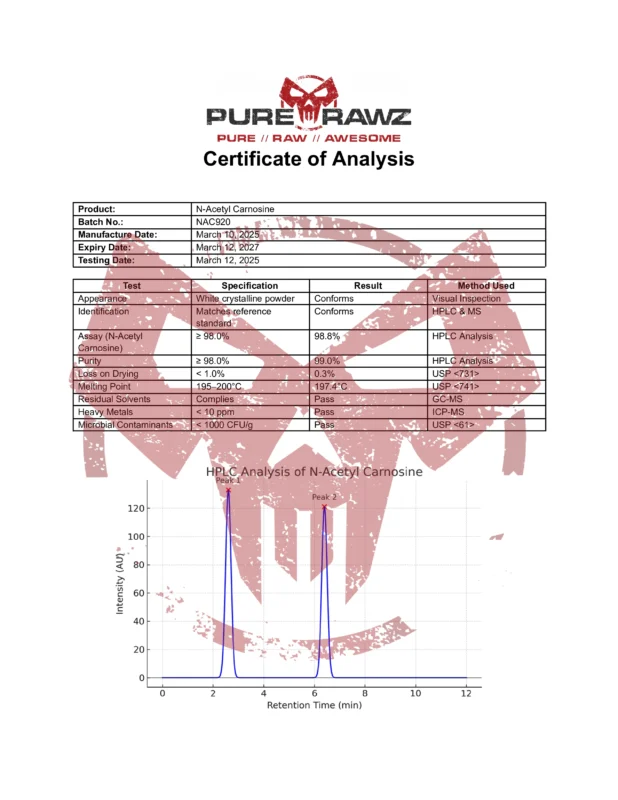
Your satisfaction is our priority, thereby giving you a Certificate of Analysis with this product. Furthermore, we offer you safe payment options so that your transactions remain secure with us.
Note:In the Nootropics Powder category, PureRawz offers lab-tested formulations including Agrocybe 30% Bisporiust, Pterostilbene (Dimethylresveratrol) and many other product.
FAQs
What is the shelf life of N-Acetyl Carnosine?
The shelf life of N-Acetyl Carnosine may vary depending on formulation and storage. However, in experimental settings, properly stored solutions have remained stable for extended periods.
What is the half-life of N-Acetyl Carnosine?
In preliminary studies, the half-life of N-Acetyl Carnosine is relatively short.
How stable is N-Acetyl Carnosine?
N-Acetyl Carnosine is considered more stable than carnosine itself in preclinical models, particularly against enzymatic breakdown.
Does N-Acetyl Carnosine undergo degradation?
Yes, N-Acetyl Carnosine may degrade over time or under improper storage conditions, as noted in experimental settings.
Disclaimer
This information is for educational purposes only and not medical advice. Products are for research use only. Research must follow IRB or IACUC guidelines. Kindly verify information independently before purchasing. By ordering, you agree to our Terms and Conditions. If you are not 100% satisfied with the product you received, please contact us at support@purerawz.co
ATTENTION: All our products are for LABORATORY AND RESEARCH PURPOSES ONLY, not for veterinary or human use.
Related products

Nootropics
Nootropics

Nootropics

Nootropics

Nootropics

Nootropics

Nootropics