
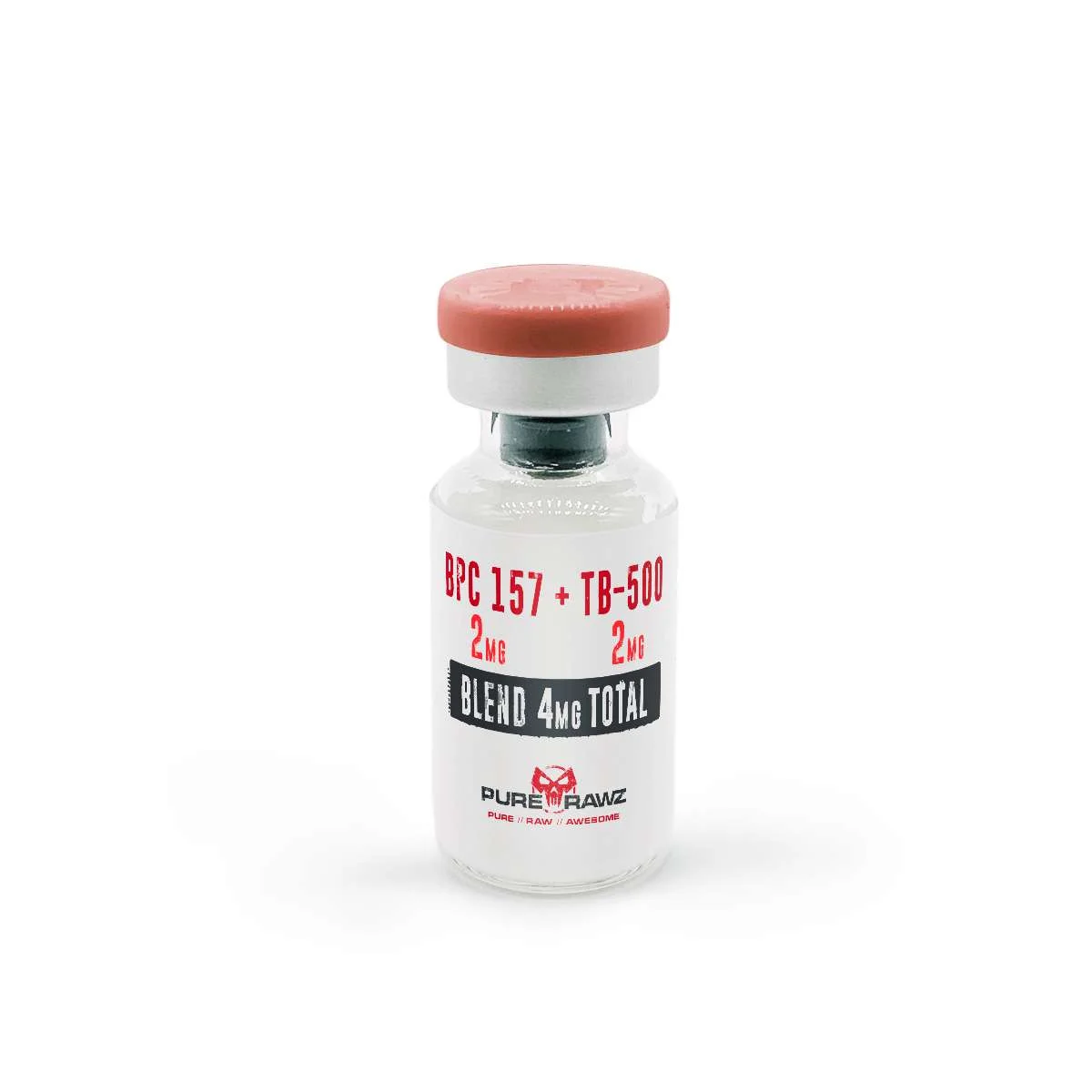

BPC-157 TB-500 for Sale
We offer you BPC-157 TB-500 blend to help enhance your research in medical settings. This unique blend is gaining enormous response from medical researchers for its synergistic effects in research models.
The combination of these peptides is studied for its potential effects on tissue integrity, cellular repair, and injury healing.
Overview of BPC-157
BPC-157 is a synthetic peptide based on a small fragment of a protective protein found in the stomach.
In research settings, it is studied for its potential role in supporting cellular repair and maintaining tissue integrity in experimental models.
Working Mechanism of BPC-157
In different research subjects, BPC-157 has appeared to work by upregulating growth factors like VEGF (vascular endothelial growth factor). Additionally, it has been shown to influence the nitric oxide (NO) pathway in preclinical models.
A few studies have indicated that BPC-157 may play an important role in controlling blood flow in research subjects. Researchers have also observed that BPC-157 may reduce inflammation, protect cells from oxidative stress, and promote cell migration.
Overview of TB-500
TB-500 is a synthetic peptide based on a small model of Thymosin Beta-4, a natural protein found in many tissues.
Researchers study TB-500 to learn its potential role in cellular migration and tissue repair. The compound is also being explored for actin cytoskeleton regulation in research models.
TB-500 is a synthetic peptide modelled after a short active sequence of Thymosin Beta-4 found in various tissues.
Working Mechanism of TB-500
Researchers suggested that TB-500 has been shown to work by promoting cell migration to injury sites in experimental models. By doing so, it helps damaged cells reach where they are needed for healing.
A few researchers believed that TB-500 may modulate the actin cytoskeleton, which supports cell structure and movement. Additionally, studies have suggested that TB-500 may stimulate angiogenesis in research models.
Chemical Properties of BPC-157
| Pubchem CID | 9941957 |
| Molecular Formula | C62H98N16O22 |
| Synonyms | Bpc-157
137525-51-0 Bpc-157 Bepecin Bpc 15 |
| Molecular Mass | 1419.5 g/mol |
| IUPAC | glycyl-L-alpha-glutamyl-L-prolyl-L-prolyl-L-prolyl-glycyl-L-lysyl-L-prolyl-L-alanyl-L-alpha-aspartyl-L-alpha-aspartyl-L-alanyl-glycyl-L-leucyl-L-valine |
| CAS | 137525-51-0 |
| IUPAC Condensed | H-Gly-Glu-Pro-Pro-Pro-Gly-Lys-Pro-Ala-Asp-Asp-Ala-Gly-Leu-Val-OH |
| Storage | Freezer -20°C (Lyophilized Powder), Freezer -18°C (solution) |
| Property | Hygroscopic (It absorbs moisture from the air) |
| Purity | ≥98% |
| Pka | 3.36±0.10(Predicted) |
| Solubility | Methanol (Slightly), Water (Slightly) – (Soluble in sterile or bacteriostatic water) |
| Potential Benefits |
|
| Potential Side Effects |
|
Chemical Properties of TB-500
| Molecular Formula | C212H350N16O22 |
| Classification | Thymosin B-4-derived research peptide |
| Molecular Mass | 4963 G/MOL |
| CAS | 77591-33-4 |
| Peptide length | Commonly referenced as a 43-amino-acid sequence in research settings |
| Solubility | May dissolve in sterile water or bacteriostatic water in research settings |
| Potential Benefits |
|
| Potential Side Effects |
|
| Property | Hygroscopic |
| Purity | ≥98% |
Handling and Storage of BPC-157 TB-500
Handling and storing the blend of BPC-157 TB-500 is important for long-term research use. Here are the guidelines to follow:
- You can store the lyophilized (dry) form in -20°C or lower for long-term stability.
- Make sure to keep the vials in amber containers or light-blocking packaging.
- Always reseal the vials promptly to avoid moisture.
Research Application of BPC-157 TB-500
BPC-157 tb-500 has been researched by various medical researchers in labs for the following potential applications.
- Tissue repair and wound healing in research models.
- BPC-157 may aid cellular repair and gut tissue integrity in experimental models.
- TB-500 may promote cell migration and connective tissue repair as observed in preclinical models.
- The blend of these two may potentially reduce inflammation. Plus, it may support the recovery of muscles, tendons, and ligaments in experimental settings.
Regulatory Status of BPC-157 TB-500
BPC-157 and TB-500 are not FDA-approved for human or veterinary use. They are sold as research chemicals online. Moreover, these peptides are prohibited by the World Anti-Doping Agency.
Note: The stack is not FDA-approved for medical use.
Why choose us for BPC 157 TB-500?
At Purerawz, we take full responsibility for our research compounds and provide you with the most authentic research chemicals. Buy the BPC-157 TB-500 stack from our online shop and level up your research.
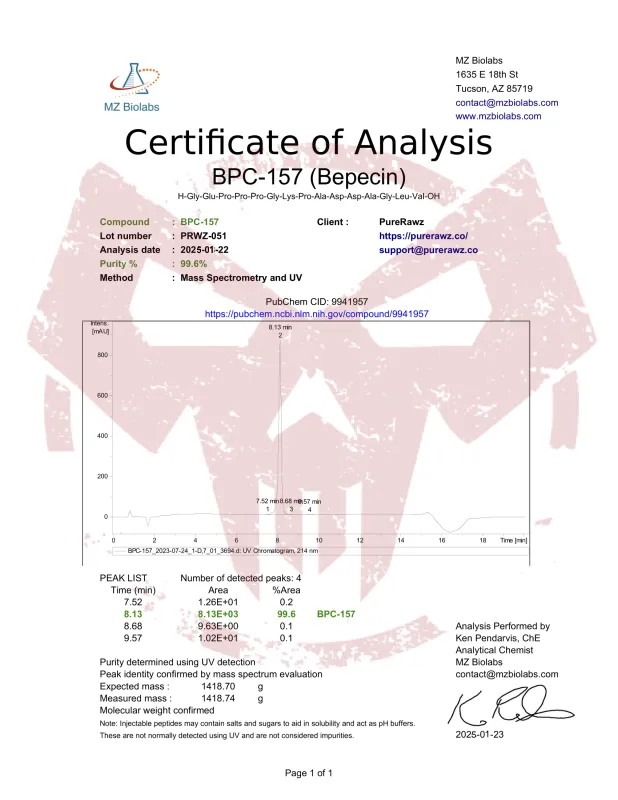
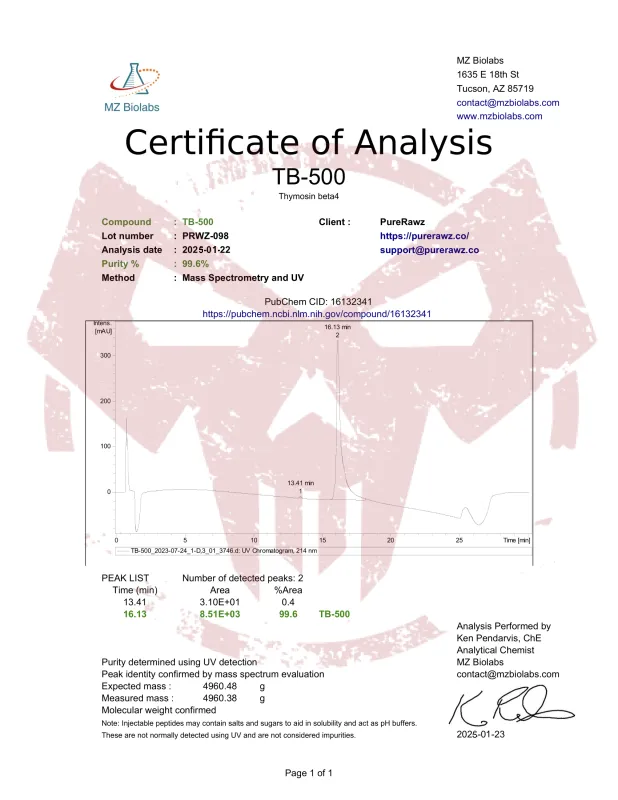
We offer BPC-157 TB-500 to researchers of all levels. You will get a first and third-party-verified blend along with a proper Certificate of Analysis. Through HPLC testing, you’ll be assured of the purity of the ingredients in this compound.
When it comes to shipping and pricing, we give you peace of mind there as well. We offer quick delivery of products at economical prices. Your transactions are secure with us as we provide safe payment methods.
Disclaimer
This information is for educational purposes only and not medical advice. Products are for research use only. Research must follow IRB or IACUC guidelines. Verify information independently before purchasing. By ordering, you agree to our Terms and Conditions. If you are not 100% satisfied with the product you received, please contact us at support@purerawz.co
ATTENTION: All our products are for LABORATORY AND RESEARCH PURPOSES ONLY, not for veterinary or human use.
Reference Links
| Perishable. (2020, March 3). BPC-157: Experimental Peptide Creates Risk for Athletes. U.S. Anti-Doping Agency (USADA). https://www.usada.org/spirit-of-sport/bpc-157-peptide-prohibited/
Nikhil Vasireddi, Henrik Hahamyan, Salata, M. J., Karns, M., Calcei, J. G., Voos, J. E., & Apostolakos, J. M. (2025). Emerging Use of BPC-157 in Orthopaedic Sports Medicine: A Systematic Review. HSS Journal®, the Musculoskeletal Journal of Hospital for Special Surgery. https://doi.org/10.1177/15563316251355551 Jozwiak, M., Bauer, M., Kamysz, W., & Kleczkowska, P. (2025). Multifunctionality and Possible Medical Application of the BPC 157 Peptide-Literature and Patent Review. Pharmaceuticals (Basel, Switzerland), 18(2), 185. https://doi.org/10.3390/ph18020185 Ho, E. N. M., Kwok, W. H., Lau, M. Y., Wong, A. S. Y., Wan, T. S. M., Lam, K. K. H., Schiff, P. J., & Stewart, B. D. (2012). Doping control analysis of TB-500, a synthetic version of an active region of thymosin B4, in equine urine and plasma by liquid chromatography-mass spectrometry. Journal of Chromatography A, 1265, 57-69. https://doi.org/10.1016/j.chroma.2012.09.043 |
Related products

Peptides

Peptides
Peptides

Peptides

Peptides

Peptides

Peptides

Peptides